
Abstract mixed-media artwork featuring layered brushstrokes, scribbled lines, torn paper textures, and bold contrasts of light and dark value, with splashes of black, cream, blue, green, and warm sunset colors.

The Importance of Value in Art and How to Use It

Ben Tiffany

New to value in art? Learn how light and dark tones create depth, contrast, and realism in drawing, painting, and monoprinting — plus beginner tips for using a value scale.

Hands holding a colorful gel plate monoprint with bright blue, pink, and yellow abstract textures in an art studio, with paintbrushes, inks, and additional prints displayed in the background.

Gel Plate Printing: Essential Tips for New Artists

Ben Tiffany

New to gel plate printing? Learn what a gelli plate is, the tools and paints you need, beginner-friendly techniques, and creative ways to use your finished monoprints.


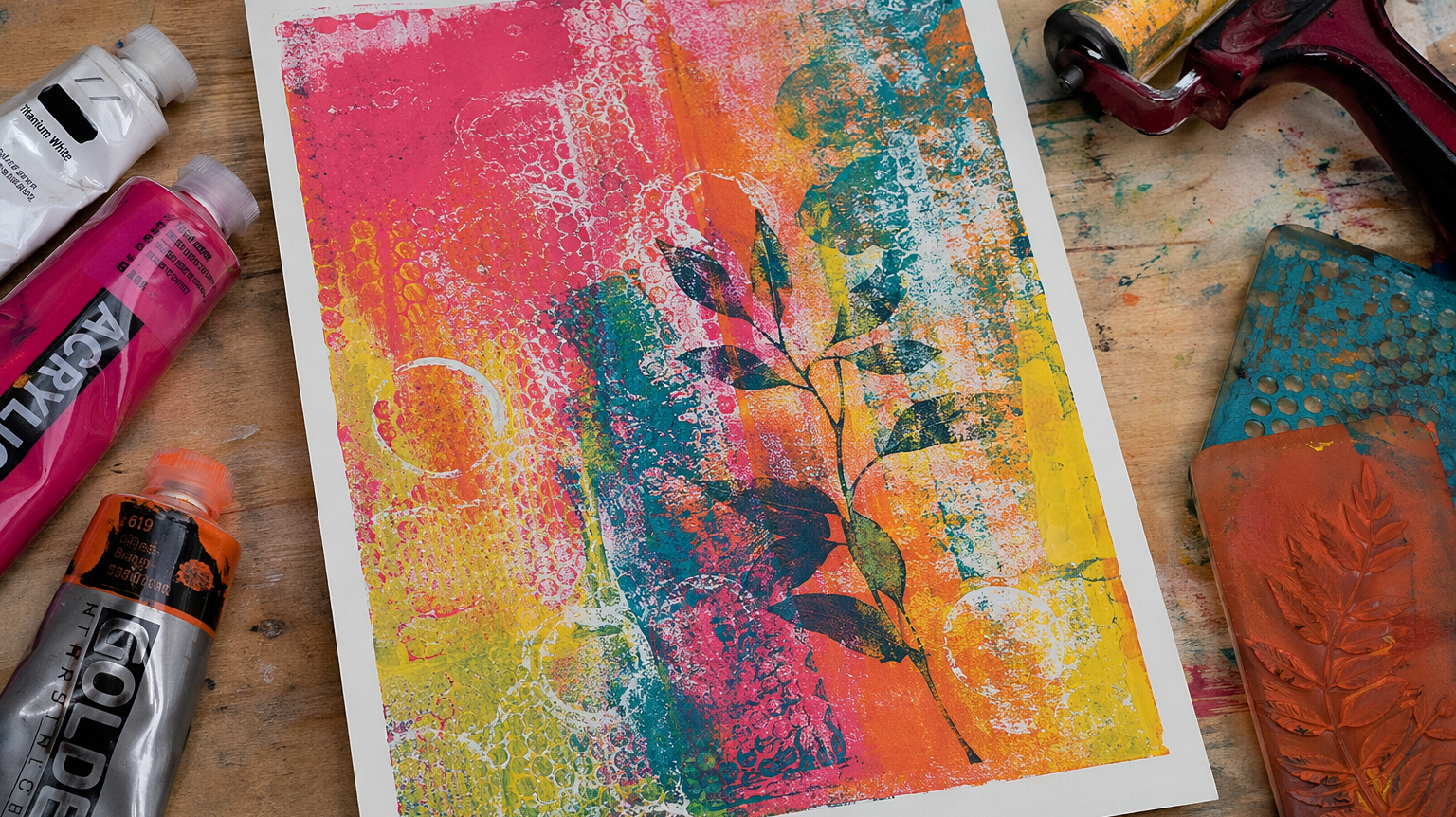
Open art journal filled with colorful gel plate monoprints—circles and black fern silhouettes—surrounded by paint jars, brayer, brushes, stamps, and collage papers on a messy wooden table.

How to Start Art Journaling: A Complete Beginner's Guide

Ben Tiffany

New to art journaling? Learn what an art journal is, why the creative process matters more than perfection, and how to start your first page with simple supplies.

Gelatin Painting: A Fun Introduction to Monoprinting

Gelatin Painting: A Fun Introduction to Monoprinting

Ben Tiffany

Curious about gelatin painting? Learn how to use gel printing plates, acrylic paint, and simple tools to create playful, one-of-a-kind monoprints at home.

Close-up of a blue human eye integrated into a vibrant mixed media collage artwork with layered paint, torn paper textures, and abstract colors in pink, yellow, blue, and gray, representing creative expression and modern street art style.

How to Start Your Journey in Mixed Media Printing

Ben Tiffany
Key Highlights Mixed media printing is an art form where you can put different materials and ways of making art together in one single piece. You might use printing, collage,...
What is Gel Printing? A Beginner's Complete Guide

What is Gel Printing? A Beginner's Complete Guide

Ben Tiffany

New to gel printing? Learn what it is, how it works, essential tools, and beginner techniques so you can start creating unique prints with confidence.

Gel Printing Plates: What They Are, How They Work & Why Artists Love Them

Gel Printing Plates: What They Are, How They Work & Why Artists Love Them

Ben Tiffany

A gel printing plate is a soft, reusable surface for making unique monoprints without a press. Roll on acrylic paint with a brayer, add patterns with stencils or natural textures, then pull vibrant one-of-a-kind prints. Plates clean up with soap and water, store flat at room temp, and work for cards, collage papers, journals, and fabric. Great for beginners through pros, at home or in the classroom.


Balance in Art: Definition, Types & Why It Matters

Balance in Art: Definition, Types & Why It Matters

Ben Tiffany

Balance is the design principle that distributes visual weight so artwork feels stable and intentional. This guide explains what balance is, why it matters, and how to use symmetrical, asymmetrical, and radial balance to create harmony, focus, and movement. See how contrast, proportion, and negative space affect balance, and get practical tips (plus class-friendly Gel Press ideas) to build stronger, more engaging compositions.


The Principles of Art & Design: Definitions & Examples

The Principles of Art & Design: Definitions & Examples

Ben Tiffany

Why do some artworks just “feel right”? The principles of art—balance, contrast, emphasis, movement, pattern, rhythm, and unity/variety—show you how to arrange lines, colors, shapes, and textures for impact. This guide explains each principle in plain language, how it differs from the elements of art, and gives quick tips for applying them in drawings, paintings, and Gel Press monoprints to create cohesive, eye-catching compositions.


What Are Erasers Made Of? Materials, Types & How They Work

What Are Erasers Made Of? Materials, Types & How They Work

Ben Tiffany

Erasers aren’t all the same. From natural rubber to vinyl and modern synthetics, each material affects feel, residue, and precision. Explore how manufacturing works, why friction and adhesion lift graphite cleanly, and when to choose rubber, vinyl/plastic, kneaded, or specialty electric erasers. We also cover additives (fillers, pigments, softeners), allergy-safe options, and simple cleaning/storage tips to keep your erasers performing like new.


Green Color Psychology: Meaning, Symbolism & Shades

Green Color Psychology: Meaning, Symbolism & Shades

Ben Tiffany

Green signals calm, balance, and renewal—and its meaning shifts by culture and shade. From dark green’s ties to wealth and ambition to pale green’s peace, learn how green influences emotions, creativity, and healing. We cover history (from plant dyes to toxic synthetics), global symbolism, and practical tips for using green effectively in art, interiors, and branding.


What Color Is Van Dyke Brown? Undertones, History & Best Uses

What Color Is Van Dyke Brown? Undertones, History & Best Uses

Ben Tiffany

Van Dyke Brown is a classic, deep warm brown named for 17th-century painter Anthony van Dyck. Once made from peat and soil, today it’s formulated from stable pigments (often transparent red iron oxide + carbon black) for excellent lightfastness. Explore its peat/sepia undertone, how it compares to Burnt Umber, mixing and glazing tips, plus best practices across oil, acrylic, and watercolor. A timeless workhorse for shadows and earthy palettes.